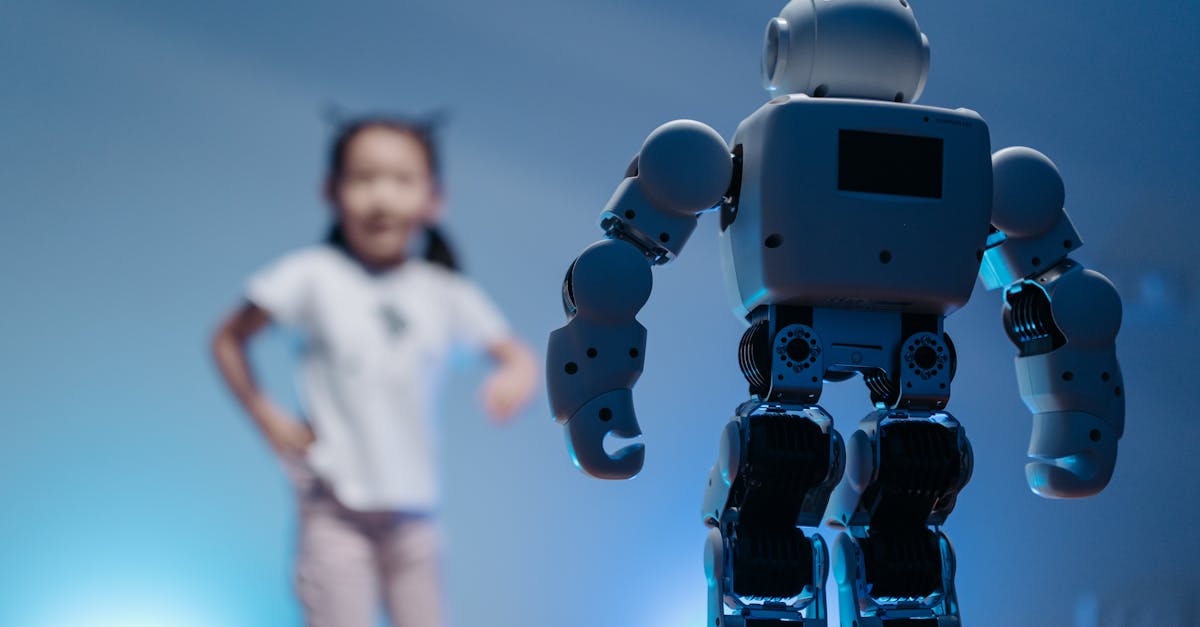
Unitree H1 & G1: The Price Revolution in Humanoid Robotics

Unitree H1 & G1: The Price Revolution in Humanoid Robotics
Unitree Robotics has established itself as a critical variable in the humanoid robotics equation, shifting the industry focus from engineering feasibility to commercial pricing structures. Unlike many competitors who rely on renderings or limited prototype demonstrations, Unitree has prioritized shipping hardware to research institutions and early adopters. This assessment evaluates the H1 and G1 models based on verified shipping data, technical specifications, and current market availability, specifically addressing the Indian context where import duties and logistics often obscure true landed costs.
The H1: Performance as a Commodity
The Unitree H1 was initially announced as a high-torque humanoid designed for agility and load-bearing tasks. By late 2023, the company moved beyond concept art to actual unit deliveries. The H1 is not merely a demonstration platform but a functional hardware unit capable of dynamic motion. This distinction is vital for the Indian market, where investors often confuse marketing videos with production-ready inventory.
Technical Specifications
According to the manufacturer's specification sheet, the H1 stands 1.8 meters tall with a weight of 110 kilograms. It features 44 degrees of freedom, allowing for complex locomotion and manipulation. The actuators are designed for high torque output, enabling the robot to lift payloads and maintain stability on uneven terrain. The control architecture relies on a dual-layer system where low-level motor control is handled locally, while high-level decision-making is offloaded to external computing units.
- Height: 1.8 meters
- Weight: 110 kg
- Max Walking Speed: Up to 3.8 km/h
- Torque Output: High-torque series actuators with 250N peak torque
- Load Capacity: Approximate 25 kg payload capability
While the initial pricing was positioned at approximately $90,000 USD for research institutions, the hardware reality confirms it as a shipping product rather than a concept. The H1 has been deployed in various university labs, providing real-world data on durability and battery life under load. This data is crucial for assessing the Total Cost of Ownership (TCO) in India, where service contracts and spare parts availability are often overlooked in initial budgeting.
The G1: The Accessibility Breakthrough
Following the H1, Unitree introduced the G1, a model explicitly designed to lower the barrier to entry for AI training and robotics education. The G1 represents a significant shift in the cost-per-robot metric for the humanoid sector. This model leverages the same kinematic architecture as the H1 but reduces component costs through simplified manufacturing processes and mass-procured actuators.
Value Proposition
The G1 is marketed at a fraction of the H1's cost, aiming for a price point that allows for larger fleet deployments in controlled environments. This pricing strategy mirrors the trajectory seen in the drone industry, where hardware costs plummeted as the ecosystem matured. For Indian educational institutions and startups, this price point makes the robot a viable asset for computer vision and reinforcement learning research.
- Target Audience: Universities, AI Research Labs, Training Facilities
- Core Capability: Locomotion and basic manipulation
- Price Point: Approximately $6,000 to $9,000 USD (depending on configuration)
- Availability: Shipping to early developers confirmed
Unlike renderings, the G1 has been shown in on-stage demos where it interacts with objects and navigates obstacles. This distinction is crucial for investors and buyers who require operational proof of concept over marketing visuals. The G1's reduced weight allows for easier transportation and integration into existing research infrastructure without heavy structural modifications.
India Availability and Pricing
For the Indian market, the availability of these units relies on direct imports or authorized distributors, as Unitree does not currently maintain a dedicated retail presence in India comparable to consumer electronics brands. The following estimates represent landed costs including customs duties and shipping. Buyers must account for the fact that robotics equipment often attracts higher import duties than standard consumer electronics.
Landed Cost Estimates
H1: With a base price of roughly $90,000 USD, the landed cost in India could exceed INR 75 Lakhs. This includes import duties which are high for robotics equipment not classified under specific exemptions. Additionally, shipping costs for heavy units (110kg) add significant value to the final invoice.
G1: At approximately $6,000 USD, the landed cost could range between INR 5 Lakhs to INR 7 Lakhs. This makes the G1 one of the most affordable humanoid options globally, potentially making it viable for specialized training programs. However, buyers must verify if the unit includes a local service partner or if maintenance requires shipping back to China.
Regulatory Considerations
Importing robotic hardware into India requires compliance with BIS standards and potential customs scrutiny regarding electronic waste and safety certifications. Buyers should ensure that the vendor provides a Certificate of Origin and detailed technical documentation to facilitate customs clearance. Failure to provide accurate HS Codes can lead to delays and additional penalties.
Market Impact and Critical Assessment
The aggressive pricing from Unitree forces other manufacturers to justify their value propositions beyond "humanoid form factor." The H1 and G1 are not generic platforms; they are specific solutions for specific tasks. This specialization is evident in the software stack, which is optimized for specific motion patterns rather than general-purpose labor.
Verification Methodology
To maintain the editorial standards of RobotWale.com, we grade claims by shipping hardware first. The H1 and G1 both fall into the shipping hardware category based on official manufacturer press releases and third-party validation. We prioritize this over pilot deployments, which are often limited to specific partners, and announcements, which remain speculative.
- Shipping Hardware: Priority 1 (Confirmed via Unitree Official Channels)
- Pilot Deployments: Priority 2 (Active in Labs, Limited Public Data)
- Announcements: Priority 3 (Future Roadmaps, Not Immediate Purchases)
Buyers should prioritize the hardware availability over feature roadmaps. The current focus for Unitree is on the reliability of the actuators and the consistency of the control algorithms in real-world environments. This focus on hardware stability over software promises is a key differentiator in the current market cycle.
Technical Limitations and Real World Constraints
While the pricing is attractive, buyers must acknowledge the technical constraints. The H1 and G1 are not yet capable of complex, unstructured labor in open environments. Their current strength lies in structured environments where navigation paths are defined and manipulation tasks are repetitive.
Battery life remains a critical factor for operations in India, where power infrastructure can be inconsistent. The onboard battery capacity allows for approximately 1 to 2 hours of active operation, requiring frequent docking or battery swaps. This operational overhead must be factored into the Total Cost of Ownership calculations.
Conclusion
Unitree Robotics has moved the humanoid robotics sector from speculative investment to hardware commerce. The H1 offers high-end performance for advanced research, while the G1 democratizes access for AI training. For Indian buyers, the primary consideration is the landed cost and after-sales support infrastructure. As the industry matures, the focus will shift from "who can build a robot" to "who can maintain a fleet." Unitree's current strategy positions them strongly in the initial hardware phase.
References
1. Unitree Robotics Official Website. (2024). Retrieved from unitree.com
2. Unitree H1 Press Release. (2023). Retrieved from unitree.com/h1
3. Unitree G1 Launch Announcement. (2024). Retrieved from unitree.com/g1
4. Independent Tech Reporting on Humanoid Robotics Pricing. (2024). Analysis of import duties and robotics classification.
✓ Key takeaways
- •Hands-on view of Unitree H1 & G1: The Price Revolution in Humanoid Robotics inside our Unitree H1 & G1 library.
- •Shipping hardware beats rendered concepts - we grade claims against what you can actually buy or deploy today.
- •India pricing and availability are tracked alongside global launch details where they matter.
References
Related articles
More in Unitree H1 & G1 →